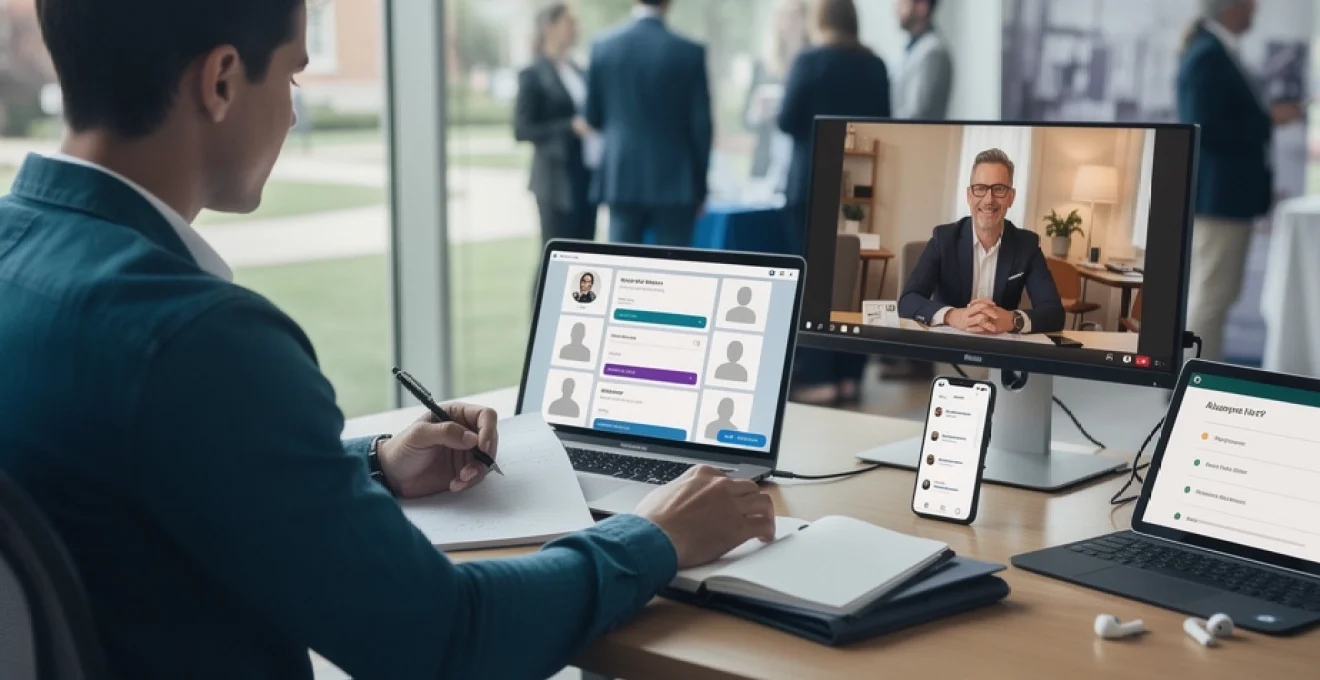
Navigating career decisions without experienced guidance can feel like charting unknown waters without a compass. Whether you’re exploring industry transitions, seeking mentorship on professional development, or simply trying to understand what lies beyond graduation, alumni networks represent one of the most underutilised yet powerful resources available. Research consistently shows that alumni are three times more likely to respond positively to outreach from fellow graduates or current students from their alma mater, creating a unique advantage that many professionals overlook. The shared experience of attending the same institution creates an immediate foundation of trust and goodwill that transcends typical professional networking barriers.
Building meaningful connections with alumni requires more than sending generic LinkedIn messages hoping for responses. It demands strategic thinking, personalised communication, and genuine relationship-building that respects the alumnus’s time whilst demonstrating your commitment to growth. The difference between successful alumni engagement and messages that disappear into the void often lies in how thoughtfully you approach the entire process—from identifying the right mentor to maintaining those relationships long after the initial conversation.
Identifying the right alumni mentor through LinkedIn advanced search and university databases
Finding the right alumni connection begins with strategic research that goes beyond surface-level browsing. The quality of your networking outcomes depends heavily on selecting mentors whose experiences align with your specific needs and career aspirations. Many students and early-career professionals make the mistake of reaching out to high-profile alumni without considering whether those individuals can actually provide the specific guidance they require. A thoughtful matching process ensures that both parties benefit from the interaction, creating foundations for meaningful, long-term professional relationships.
Leveraging LinkedIn alumni tool filters by industry and graduation year
LinkedIn’s alumni search functionality offers sophisticated filtering capabilities that many users never fully explore. By navigating to your university’s LinkedIn page and selecting the “Alumni” tab, you gain access to powerful sorting tools that allow segmentation by current company, job function, geographic location, field of study, and skills. This granular approach enables you to identify professionals who have walked similar paths or pivoted into industries you’re exploring. For instance, if you’re a psychology graduate considering transition into user experience design, you can filter for alumni with psychology degrees now working in UX roles, providing concrete examples of successful career pivots.
The graduation year filter proves particularly valuable when seeking mentors at appropriate career stages. Connecting with alumni who graduated five to fifteen years ago often yields the most actionable advice, as these professionals remember recent career challenges whilst having achieved sufficient seniority to offer strategic insights. They’re typically more accessible than C-suite executives whilst possessing greater perspective than recent graduates. Consider creating a shortlist of ten to fifteen potential contacts across different companies and roles, giving yourself options should some not respond to initial outreach.
Accessing career services platforms like handshake and PeopleGrove
University career services increasingly deploy dedicated networking platforms designed specifically to facilitate alumni-student connections. Handshake, CareerConnect, and PeopleGrove represent purpose-built environments where alumni have explicitly opted into mentorship opportunities, dramatically increasing response rates compared to cold outreach on general platforms. These systems often include profile information specifically tailored to career guidance, such as the alumnus’s willingness to review CVs, conduct mock interviews, or discuss industry entry strategies. The self-selection factor cannot be overstated—alumni registered on these platforms have already demonstrated interest in helping current students and recent graduates.
Many institutions also maintain proprietary alumni databases accessible through career services offices or alumni relations departments. These directories frequently include contact preferences, indicating whether alumni prefer email, LinkedIn, or platform messaging. Respecting these stated preferences demonstrates professionalism and increases the likelihood of receiving responses. Some universities even offer “warm introduction” services where career advisors facilitate initial connections, effectively vouching for serious students and removing the cold outreach element entirely. Don’t hesitate to ask your career services team about available alumni networking tools—you may discover resources that 80% of students never utilise.
Utilising university alumni directories and chapter networks
Traditional alumni directories, whilst less dynamic than digital platforms, offer comprehensive contact databases that include professional histories, geographic locations, and industry affiliations. Many universities organise alumni into regional chapters or industry-specific groups that host regular networking events, professional development workshops, and informal gatherings. Joining these groups—even virtually—positions you within communities where networking feels natural rather than transactional. Alumni attending chapter events
tend to be more open to conversations because the context is already warm: you share a university, often a location, and sometimes even former lecturers or societies. Before attending a chapter event, review the attendee list if available and highlight two or three alumni whose profiles align with your interests. After a brief introduction in person or at a virtual meetup, you can follow up on LinkedIn or email referencing that shared experience, which feels far more natural than a completely cold message. Over time, staying active in these alumni chapters transforms one-off conversations into an ongoing support network that you can draw on throughout your career.
Researching alumni through professional associations and industry groups
Beyond university-managed platforms, professional associations and industry groups are rich ecosystems for finding the right alumni mentor. Many sector bodies—whether in engineering, finance, healthcare, or the creative industries—host member directories, special interest groups, or mentoring programmes where fellow alumni may be quietly active. Start by identifying associations relevant to your target field, then scan committee lists, speaker bios, and member spotlights for mentions of your university. When you find a shared institutional background, you gain an immediate opening line that cuts through the usual networking awkwardness.
Industry-specific LinkedIn groups and Slack communities can also reveal alumni who may not appear in your university’s formal directories. Joining these spaces, contributing thoughtfully to discussions, and then reaching out to individuals whose perspectives resonate with you can lead to more organic mentor-mentee relationships. Think of these groups as professional “commons” where you demonstrate your curiosity and value before requesting a one-to-one conversation. When you eventually ask for guidance, you are no longer a stranger—you are a recognised member of the same professional community with a shared alma mater, which significantly increases your chances of a positive response.
Crafting a compelling cold outreach message using the AIDA framework
Once you have identified promising alumni contacts, the quality of your outreach message becomes the deciding factor in whether they respond. Rather than improvising each time, you can rely on the classic AIDA framework—Attention, Interest, Desire, Action—to structure concise, respectful messages that stand out in a crowded inbox. Think of AIDA as a roadmap: you first capture their attention, then show why your message is relevant, build a genuine desire to help, and finally make it easy for them to say yes. This approach transforms your outreach from a vague “Can we talk?” into a focused, professional request.
Using AIDA is particularly powerful when contacting busy professionals on LinkedIn or via email, where they may receive dozens of generic requests every week. By tailoring each part of the message to the alumnus’s background and your specific career questions, you demonstrate that you have done your homework and value their time. The result is more than just a polite note—it becomes a miniature pitch for why a 20-minute informational interview with you is worth their attention.
Personalising your subject line with shared university experiences
The subject line is your first—and sometimes only—chance to capture an alumnus’s attention, so it needs to be specific and personal. Generic lines like “Seeking advice” or “Quick question” often get lost in busy inboxes, whereas references to shared university experiences immediately stand out. Including your university name, course, graduation year, or a well-known campus reference signals that this is not a mass email, but a targeted message from someone with a meaningful connection. For instance, “Fellow [University] Economics Grad (Class of 2022) Seeking 10-Minute Advice” is far more compelling than a vague greeting.
You can also experiment with subtle variations depending on the context and platform. On LinkedIn, shorter subject-like opening phrases such as “From one [University] alum to another” or “Connecting as [University] Computer Science alumni” can work well. If you know they were part of a specific society or lived in a particular residence hall, referencing that can create instant rapport: “Former [University] Debate Society member exploring careers in policy” gives them both context and a reason to care. Ask yourself: if this appeared in your inbox, would you be curious enough to open it?
Establishing common ground through mutual connections and interests
After you have secured their attention with a strong subject line, the opening of your message should quickly establish common ground. Alumni are far more likely to respond when they see clear points of connection, such as shared courses, lecturers, societies, or even mutual LinkedIn connections. A simple structure works well: introduce who you are, highlight the shared connection, and briefly explain why their career path is relevant to your goals. For example, “I recently completed the same MSc in Data Science you did, and noticed you’ve moved into healthcare analytics, which I’m exploring as a potential path.”
Beyond university ties, mentioning overlapping interests or geographies can deepen the sense of familiarity. Perhaps you volunteer in a similar cause, attend the same industry meetups, or live in the same city—these are all touchpoints that make the conversation feel more human. Think of this stage as laying the foundation of trust: you are not just a random name on a screen, but someone whose journey intersects with theirs in multiple meaningful ways. The stronger this foundation, the easier it becomes to transition into your specific questions.
Articulating specific career questions rather than generic requests
Many alumni ignore outreach messages not because they are unwilling to help, but because the request is too vague. Phrases like “I’d love to pick your brain” or “Can I get some general career advice?” require them to do the mental work of defining the conversation, which is difficult for busy professionals. Instead, you can make it easy by articulating two or three clear, focused questions that show you have already researched your field. For instance, you might ask, “What entry-level roles should I target if I ultimately want to become a product manager?” or “Which skills helped you transition from audit into corporate finance?”
Specific questions signal seriousness and preparation, and they also help alumni gauge whether they are the right person to advise you. If your questions fall outside their expertise, they can more easily refer you to a colleague or another alumnus who might be a better fit. Think of your questions like a well-defined brief: the more precise they are, the more actionable the guidance you will receive. This is where your earlier research—reviewing their profile, reading about their company, and understanding industry trends—pays off in the quality of the conversation.
Including a clear call-to-action for a 20-minute informational interview
The final step in your AIDA-based outreach is to make a simple, time-bound request that respects the alumnus’s schedule. Rather than asking for a vague “chat sometime,” propose a specific format: a 15–20 minute informational interview via Zoom, phone, or Teams within the next couple of weeks. This concrete call-to-action lowers the barrier to saying yes because the alumnus knows exactly what is expected. You might phrase it as, “Would you be open to a 20-minute conversation sometime in the next two weeks? I’d be grateful for the chance to ask you three brief questions about how you broke into consulting.”
Offering flexibility in timing and platform further increases the likelihood of a positive response. You can suggest a couple of time windows while explicitly stating that you are happy to adapt to their availability. Closing with gratitude—thanking them for considering your request even if they are unable to meet—shows professionalism and emotional intelligence. Over time, you will notice that this respectful, structured approach to informational interviews yields more responses and more meaningful alumni guidance than scattershot, unstructured outreach.
Conducting effective informational interviews through structured questioning techniques
Securing an informational interview with an alumnus is a significant achievement, but what you do with those 20 minutes determines the long-term value of the interaction. Without structure, conversations can drift into small talk or generic advice that you could have found in a blog post. By approaching the interview with clear objectives and thoughtful questioning techniques, you transform it into a focused learning opportunity. Think of yourself as a journalist or researcher: your role is to draw out stories, insights, and practical tips that you cannot access elsewhere.
Structured questioning does not mean sounding robotic or interrogative. Instead, it provides a flexible framework that keeps the conversation on track while still leaving room for organic insights. Preparing a mix of behavioural, reflective, and forward-looking questions—anchored in widely used models like STAR—helps you understand not only what the alumnus did, but how and why they made their decisions. This depth of understanding is what will ultimately guide your own career planning and skill development.
Preparing STAR method questions about their career trajectory
The STAR method—Situation, Task, Action, Result—is commonly used to answer interview questions, but it is equally powerful as a lens for asking questions. Instead of broad prompts like “Tell me about your career journey,” you can invite detailed, story-based responses that reveal the real decision points and trade-offs they faced. For example, you might ask, “Can you share a situation early in your career when you weren’t sure which path to choose, and what specific actions helped you move forward?” This encourages them to talk through concrete moments, rather than abstract philosophies.
By framing your questions with STAR in mind, you gain insights into the actual steps involved in their progression—from internships and entry-level roles to promotions and lateral moves. You might ask, “What tasks did you focus on in your first year that made you stand out for your current role?” or “Could you walk me through one key project that accelerated your transition into management?” These questions yield rich narratives that show you what effective behaviour looks like in the real world, helping you reverse-engineer your own next steps.
Asking about industry-specific challenges and emerging trends
One of the greatest advantages of speaking to alumni in your target field is access to up-to-the-minute industry intelligence. Job descriptions and company websites often lag behind reality, whereas practitioners live the day-to-day shifts in technology, regulation, and market expectations. During your informational interview, set aside time to ask about current challenges and emerging trends that may not yet be widely documented. You might say, “From your perspective, what are the biggest changes happening in your industry over the next three to five years?” or “What challenges are junior hires facing that didn’t exist when you started?”
These questions not only give you a clearer view of where the sector is heading but also demonstrate that you are thinking strategically about your career. Alumni often enjoy sharing their informed opinions and may reveal niche growth areas or emerging roles that could position you ahead of your peers. Hearing about industry shifts directly from someone on the inside is like getting a weather forecast before setting sail—you can adjust your course before the storm hits or the winds change direction.
Requesting actionable advice on skill development and certifications
After exploring the alumnus’s career path and industry landscape, you will likely want to translate those insights into concrete actions. This is where targeted questions about skills and certifications are particularly valuable. Instead of asking, “What should I do next?” try, “If you were in my position today—studying X or working in Y—what three skills would you prioritise over the next 6–12 months?” You can also ask, “Are there any specific certifications, micro-credentials, or projects that would make my CV more competitive for roles like yours?”
These practical questions invite the alumnus to tailor their advice to your current stage and aspirations. In many industries, there is a gap between what is taught in formal education and what employers actually look for—alumni can help you bridge that gap. Treat their recommendations as a personalised learning roadmap: a curated list of skills, courses, tools, or experiences that will move you closer to the kind of role you want. By the end of the conversation, you should have a shortlist of next steps that you can begin acting on immediately.
Documenting key insights using note-taking apps like notion or evernote
Informational interviews can be dense with insights, and it is easy to forget critical details once the conversation ends. To ensure you capture and revisit the guidance you receive, make a habit of documenting key points in a structured way. You might use note-taking tools like Notion, Evernote, or OneNote to create a simple template for each alumni conversation: date, background of the alumnus, main insights, recommended actions, and any follow-up commitments you made. Letting them know at the start that you may jot down notes also signals that you take their time seriously.
Over time, this growing archive becomes a personalised career playbook that you can refer back to when making decisions about internships, job applications, or further study. Patterns will begin to emerge—perhaps multiple alumni emphasise the same core skills, or repeatedly mention certain companies as great training grounds. Treat this as data: the more alumni perspectives you log, the clearer your next steps become. In this way, each conversation adds another piece to the puzzle of your career development, rather than fading into a blur of half-remembered advice.
Building long-term alumni relationships through strategic follow-up protocols
Many people think of alumni networking as a series of one-off conversations, but the most valuable connections develop over months and years. Strategic follow-up is how you move from a single informational interview to an ongoing mentor-mentee relationship. The goal is not to bombard alumni with constant messages, but to stay on their radar in a thoughtful, low-maintenance way. You are aiming for a rhythm of contact that feels natural, where each interaction adds value rather than simply asking for more.
A simple follow-up protocol might include three stages. First, send a personalised thank-you message within 24 hours, highlighting one or two specific insights that were especially helpful and sharing any immediate actions you plan to take. Second, update them a few weeks or months later on the outcomes of their advice—perhaps you completed a suggested course, secured an interview, or refined your CV based on their feedback. Third, keep in light touch over the long term by occasionally sharing relevant articles, congratulating them on promotions or achievements, or asking a focused question when you reach a new career milestone.
This approach turns the relationship into a two-way exchange rather than a series of requests. Whenever possible, look for small ways to offer value in return: perhaps you can share insights from a conference you attended, recommend a talented peer for an opportunity at their company, or volunteer to support a project or event they are involved in. Even as a student or early-career professional, you can be a source of energy, fresh perspectives, and connections. Over time, this reciprocity builds trust—so when you eventually need a reference, referral, or recommendation, it feels like a natural extension of the relationship rather than a sudden ask.
Navigating professional boundaries and etiquette in mentor-mentee dynamics
While alumni are often generous with their time, it is important to recognise that they are not obligated to become your personal career coach. Respecting professional boundaries and practising good etiquette ensures that the relationship remains positive and sustainable. This begins with punctuality and preparation: arrive on time to calls, test your technology in advance for virtual meetings, and come with an agenda or list of questions so that you use the allotted time efficiently. Think of each interaction as a micro-interview where you are subtly demonstrating your professionalism and reliability.
It is equally important to be mindful of the frequency and nature of your requests. Asking for repeated meetings, detailed CV rewrites, or direct referrals after a single conversation can feel intrusive. Instead, allow the pace of contact to be guided by the alumnus: if they offer to review your portfolio or suggest a follow-up call, you can accept gratefully; if not, keep your check-ins occasional and purposeful. As your career evolves, you may also need to renegotiate expectations—what began as a structured mentoring relationship might naturally shift into a more peer-like professional friendship over time.
Finally, be cautious about sensitive topics. Avoid pressing for confidential information about their company, colleagues, or internal hiring processes, and never use their name without explicit permission when referencing conversations with recruiters or other contacts. If you sense hesitation around a particular question, gracefully move on rather than pushing for answers. By consistently demonstrating discretion and respect, you signal that you are a trustworthy person to support—someone they can confidently recommend or introduce to their own network in future.
Maximising alumni networking opportunities at university career fairs and virtual events
University career fairs, alumni panels, and virtual networking sessions offer concentrated opportunities to meet multiple alumni in a short space of time. However, without a strategy, it is easy to leave these events with nothing more than a handful of brochures and vague memories. To maximise alumni networking at such events, start with preparation: review the list of attending organisations and speakers, highlight alumni you want to meet, and draft two or three concise “micro-introductions” you can use when approaching them. Having this groundwork in place allows you to focus on building rapport rather than scrambling for words in the moment.
During the event, treat each conversation as the beginning of a potential relationship rather than a high-pressure pitch. Ask targeted questions about their role, what they enjoy about their organisation, and what skills they see as critical for new hires. If you are attending virtually, use the chat functions or breakout rooms to introduce yourself and follow up with a LinkedIn connection request immediately afterwards, referencing your interaction. Think of the event as planting seeds: your job is to make a strong initial impression, capture contact details where appropriate, and then nurture those connections through the follow-up protocols discussed earlier.
After the event, set aside time to organise your notes and send tailored follow-up messages within a few days while the interaction is still fresh in their mind. Mention something specific you discussed—perhaps a project they referenced, a piece of advice they offered, or a resource they recommended—to show that you were actively listening. You might also share a brief reflection on how the event influenced your thinking about your career path. By approaching career fairs and virtual alumni events as part of a broader, long-term networking strategy rather than standalone occasions, you turn fleeting introductions into enduring professional relationships that can guide and support you for years to come.