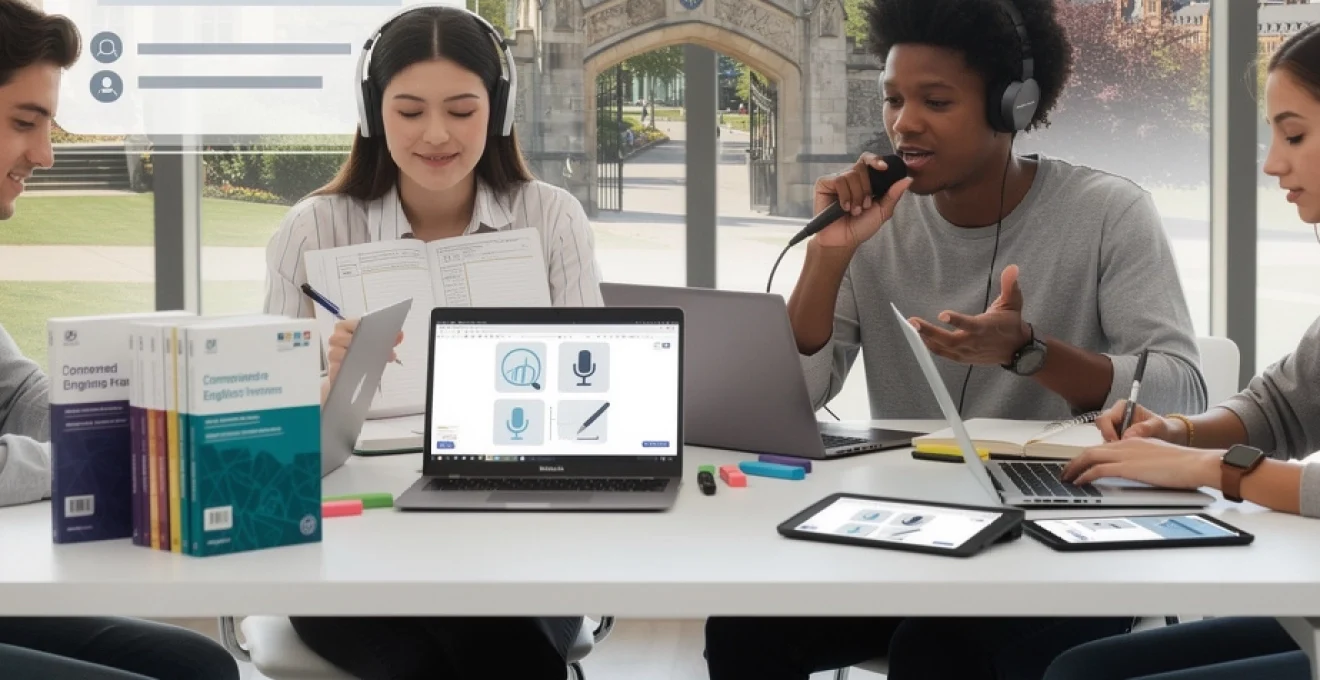
For millions of students and professionals worldwide, demonstrating English language proficiency stands as a critical milestone in achieving academic and career aspirations. The Test of English as a Foreign Language (TOEFL) has established itself as one of the most widely recognised and respected assessments of English communication skills, accepted by over 11,500 institutions across 160 countries. Whether you’re planning to pursue higher education at a prestigious university, seeking professional licensure in an English-speaking country, or applying for immigration programmes, understanding the TOEFL examination and developing an effective preparation strategy can significantly influence your success. This comprehensive examination evaluates your ability to use and understand English at the university level, measuring how well you combine listening, reading, speaking, and writing skills to perform academic tasks.
Understanding the TOEFL iBT test format and scoring system
The TOEFL iBT (Internet-Based Test) represents the current standard format for this crucial examination, designed to assess your English language abilities in academic contexts. The test comprises four distinct sections that evaluate different language skills, with each section contributing to your overall score. Understanding the structure and timing of each component is essential for developing an effective preparation strategy and managing your performance on test day.
The complete TOEFL iBT examination typically requires approximately two hours to complete, though the actual duration may vary slightly depending on how the adaptive test presents questions to you. This streamlined format, introduced in recent years, has made the test more efficient whilst maintaining its rigorous assessment standards. The examination employs an adaptive testing approach, meaning that the difficulty and number of questions may adjust based on your performance, ensuring a more personalised and accurate evaluation of your English proficiency.
Reading section: academic passage analysis and question types
The Reading section presents you with academic texts similar to those encountered in university-level coursework across various disciplines. You’ll engage with approximately 50 questions based on these passages, with a base time allocation of around 30 minutes. The texts cover subjects ranging from natural sciences and social sciences to arts and humanities, requiring you to demonstrate comprehension skills including identifying main ideas, understanding supporting details, making inferences, and recognising the author’s purpose and rhetorical strategies. Each passage typically contains 500-700 words, challenging you to quickly process complex information whilst maintaining accuracy in your responses.
Question types within the Reading section vary considerably, testing multiple dimensions of your comprehension abilities. You’ll encounter factual information questions, negative factual questions (identifying what is not stated), inference questions, rhetorical purpose questions, vocabulary questions, reference questions, sentence simplification questions, and insert text questions. The final question for each passage typically asks you to complete a summary or fill in a table, testing your ability to distinguish major from minor ideas and to recognise the overall organisation of the text.
Listening section: campus conversations and academic lectures
The Listening section evaluates your ability to understand spoken English in academic settings, presenting approximately 47 questions over a base time of 29 minutes. You’ll listen to recordings of campus conversations—typically between a student and a university employee—and academic lectures delivered by professors in various disciplines. Unlike the Reading section, you cannot review the audio content, making note-taking skills particularly valuable. The conversations and lectures incorporate natural speech patterns, including pauses, self-corrections, informal language, and different accents, reflecting the authentic linguistic environment you’ll encounter in English-speaking academic institutions.
Questions assess both basic comprehension and your ability to understand the speaker’s attitude, degree of certainty, and implied meanings. You’ll need to identify main ideas and supporting details, recognise a speaker’s purpose, understand the function of what is said, and make inferences based on what you hear. The academic lectures may include visual content such as diagrams or charts displayed on screen, requiring you to integrate visual and auditory information—a skill frequently demanded in actual university settings.
Speaking section: independent and integrated task structure
The Speaking section consists of approximately 11 tasks completed within a base time of 8 minutes, evaluating your ability to communicate effectively in English in academic contexts. Your responses are recorded and subsequently evaluated by certified raters who assess your delivery, language use, and topic development. The tasks combine independent speaking, where you express personal opinions on familiar topics, with integrated tasks that require
combining reading and listening inputs with a spoken response. For example, you may read a short campus notice, listen to a related conversation, and then summarise the key points while explaining your opinion. Other integrated tasks ask you to summarise the relationship between an academic reading passage and a lecture, demonstrating your ability to synthesise information from multiple sources in real time.
Each TOEFL Speaking task is strictly timed, so practising concise and well-structured responses is crucial. You typically have a short preparation period—often 15 to 30 seconds—followed by a speaking time of 45 to 60 seconds. Raters evaluate how clearly you organise your ideas, the range and accuracy of your vocabulary and grammar, and how naturally you speak under pressure. Think of each speaking task as a mini-presentation: you need a brief introduction, one or two well-developed points with examples, and a short conclusion, all delivered with steady pace and intelligible pronunciation.
Writing section: integrated essay and academic discussion tasks
The Writing section measures your ability to express complex ideas in written English, using academic-style language that universities expect. In the current TOEFL iBT format, you complete two main tasks in approximately 23 minutes of base time. The integrated writing task requires you to read a short academic passage, listen to a lecture that addresses the same topic, and then write an essay explaining how the lecture relates to, supports, or challenges the information in the reading. This task tests not only your writing skills but also your ability to identify key points, compare perspectives, and summarise information accurately.
The second writing task is an academic discussion-style response, where you join an online classroom discussion by reading a prompt and previous student comments, then contributing your own written response. Here, you must demonstrate that you can respond appropriately to others’ ideas, present a clear position, and support it with relevant reasons or examples. Rather than writing a long research paper, you are expected to produce a focused, well-organised response using precise vocabulary and correct grammar. Successful TOEFL test preparation for the Writing section therefore involves practising both analytical writing and concise, argument-driven responses under timed conditions.
Score scales, MyBest scores, and CEFR level alignment
TOEFL iBT scores are reported on a 0–120 scale, with each of the four sections—Reading, Listening, Speaking, and Writing—scored from 0 to 30. Your overall score is the sum of these four section scores, providing a detailed picture of your English language proficiency across different skills. Universities and immigration authorities typically set minimum section scores in addition to an overall requirement, so understanding how each part contributes to your total is essential when you plan your TOEFL preparation strategy. For instance, a university might require an overall 100, with at least 22 in Speaking and Writing.
To make your results more flexible, ETS also offers MyBest scores, which combine your highest section scores from all valid TOEFL iBT tests taken in the last two years into a single “superscore”. This can be particularly helpful if, for example, you improved your Speaking and Writing in a second attempt but had stronger Reading and Listening scores from an earlier test. In addition, TOEFL scores align with the Common European Framework of Reference (CEFR) levels: broadly speaking, scores in the mid-80s to low-90s correspond to B2, while many universities that demand C1 proficiency will look for scores around 95–110. Checking how your target institution interprets TOEFL scores in relation to CEFR levels will help you set a realistic goal and measure your progress accurately.
TOEFL vs IELTS: comparative analysis for test selection
When deciding between TOEFL and IELTS, many candidates wonder which test is “easier”. In reality, both exams are widely accepted and recognised as reliable indicators of academic English proficiency, but they differ in format, scoring, and skill focus. The TOEFL iBT is primarily computer-delivered and especially common in North American universities, while IELTS offers both paper-based and computer-based options and is heavily used in the UK, Australia, and parts of Europe. If you prefer typing essays and speaking into a microphone rather than face-to-face with an examiner, the TOEFL iBT test environment may feel more comfortable.
TOEFL and IELTS also differ in task design and scoring scales. TOEFL uses a 0–120 overall scale, whereas IELTS uses band scores from 1.0 to 9.0, with half-band increments. TOEFL Listening and Reading rely entirely on multiple-choice or similar objective question types, while IELTS includes tasks such as short-answer responses and sentence completion. In Speaking, TOEFL records your answers to fixed prompts, whereas IELTS involves a live conversation with an examiner. When choosing between the two, consider where you plan to study or immigrate, your comfort with computer-based testing, and whether you prefer a more interactive speaking experience or a more standardised, recorded approach.
Official ETS preparation resources and practice materials
Building a strong TOEFL study plan starts with high-quality, authentic materials. Because ETS is the official test provider, its preparation resources mirror the structure, difficulty, and timing of the actual exam much more accurately than many unofficial alternatives. Using official TOEFL practice tests and guides helps you avoid surprises on test day and ensures that every hour of study targets the exact skills that will be evaluated. You can then supplement these resources with additional vocabulary study, grammar review, and general English practice to create a balanced approach.
Think of official ETS materials as your “core textbook” for TOEFL test preparation: they define the standards you must reach. Other resources—such as YouTube tutorials, language exchange partners, or general English apps—can act like extra practice problems or conversation clubs that support your progress. By combining official TOEFL preparation resources with personalised strategies, you can move efficiently towards your target score instead of wasting time on tasks that do not reflect the real exam.
TOEFL official guide and practice tests volume 1 & 2
The Official Guide to the TOEFL iBT Test is often considered the starting point for serious candidates. It provides a comprehensive explanation of each section, detailed descriptions of question types, and multiple full-length practice tests written by the test creators themselves. The guide explains scoring rubrics for the Speaking and Writing sections, giving you insight into how raters evaluate elements such as coherence, vocabulary range, and grammatical accuracy. Using this information, you can design your own checklists to assess practice responses, almost like using the marking scheme for an exam before you sit it.
Complementing the Official Guide, Official TOEFL iBT Tests Volume 1 & 2 offer additional full-length tests with answer keys and audio. These volumes are particularly valuable once you are familiar with the format and want realistic timed practice that mirrors the stress and pacing of test day. Because each practice test is built from previously administered TOEFL questions, they provide an accurate measure of your current level and reveal patterns in your performance. Many successful test takers treat these books as simulated exam days, completing entire tests in one sitting and carefully reviewing every mistake to refine their TOEFL test preparation plan.
ETS TOEFL practice online (TPO) full-length simulations
ETS TOEFL Practice Online (often called TPO) delivers full-length, computer-based simulations that closely reproduce the real testing experience, including adaptive behaviour and on-screen interface. You complete Reading, Listening, Speaking, and Writing sections under authentic timing conditions, and receive scores that use the same scaling and rubrics as the official exam. For many candidates, TPO tests act as dress rehearsals, helping them build endurance and learn how it feels to manage two hours of concentrated focus. Because TOEFL is a high-stakes exam, having this kind of realistic practice can significantly reduce anxiety.
One of the key benefits of TPO is the feedback you receive on your Speaking and Writing performance. While scores are often generated using automated scoring models trained on human-rated responses, the criteria applied closely follow those used on test day. This gives you a clearer picture of whether your current skill level already meets your target score, or whether you need additional TOEFL test preparation in specific areas. Treat each TPO score report as a diagnostic tool: analyse which question types cause consistent problems, how your timing feels, and whether your speaking responses meet the length and complexity expected at higher score levels.
TOEFL go! app and free sample questions
For flexible, on-the-go practice, the TOEFL Go! app offers official sample questions and practice sets directly on your mobile device. This tool is especially useful for short, focused study sessions when you have 10–15 minutes free—perhaps during a commute or a lunch break. You can review question formats, practise listening to short audio clips, and answer selected Reading, Listening, Speaking, and Writing tasks without needing a full desktop setup. Over time, these micro-sessions can have a significant cumulative impact on your readiness.
ETS also provides free TOEFL practice tests and sample questions on its website, including a full-length TOEFL iBT free practice test that simulates the structure and timing of the actual exam. Using these materials early in your TOEFL preparation plan can help you identify strengths and weaknesses before you invest in more advanced resources. Because the free test offers real scoring for Reading and Listening, along with answer keys and explanations, you can understand why specific options are correct and learn from your mistakes. This combination of structured, long-form tests and shorter mobile-based practice supports a balanced study routine.
Testready platform for personalised study plans
ETS’s TOEFL TestReady platform is designed to provide a more personalised approach to TOEFL test preparation, using data and insights to guide your study. As you complete practice sets and mini-tests, the system analyses your performance and highlights both your strengths and the skills that need further work. In other words, it acts like a digital tutor that continually adjusts your focus area, helping you spend time where it will have the greatest impact. For busy students juggling other commitments, this kind of guidance can prevent inefficient, unfocused studying.
Within TestReady, you can track your progress over time and see how close you are to your target score in each section. The platform offers targeted practice for specific question types—such as inference questions in Reading or opinion questions in Speaking—so you can drill down into your weakest areas. Because the content is built and curated by ETS, you can be confident that it reflects current test design and difficulty. Integrating TestReady into your TOEFL study routine allows you to combine the benefits of adaptive technology with the reliability of official TOEFL preparation resources.
Strategic study techniques for each TOEFL section
Effective TOEFL preparation is not only about how many hours you study, but also about how you study. Simply doing random questions or reading grammar explanations will not automatically translate into a higher TOEFL score. Instead, you need targeted strategies for each section that help you work smarter, not just harder. By adopting proven techniques—such as structured note-taking, efficient reading methods, and systematic speaking practice—you can steadily improve your performance while saving time.
Think of your TOEFL study techniques as tools in a toolbox: each one serves a particular purpose and becomes especially useful in specific situations. When Listening passages feel overwhelming, structured notes can act as your external memory. When Reading passages are long and dense, skimming and scanning can help you find key ideas quickly. As you build your own toolbox of strategies, you will feel more in control on test day, rather than hoping that your general English ability will be enough.
Cornell note-taking method for listening comprehension
The Cornell note-taking method is a powerful way to organise information from TOEFL Listening lectures and conversations. You divide your page into three sections: a narrow left column for keywords or questions, a larger right column for detailed notes, and a summary area at the bottom. While listening, you write brief phrases or symbols in the right column to capture main ideas, examples, and transitions. After the audio ends—and before the questions appear, if time permits—you use the left column and summary area to highlight key points and connections.
This structure helps you avoid the common trap of writing everything you hear, which often leads to confusion and missed information. Instead, you train yourself to listen for the speaker’s overall purpose, key arguments, and how examples support main ideas—exactly what TOEFL questions tend to target. With practice, the Cornell method turns your notes into a visual map of the lecture, making it easier to locate details when answering questions. Over time, you will find that using Cornell notes for TOEFL Listening not only improves accuracy but also reduces stress, because you know you have captured the essential information.
Skimming and scanning strategies for reading efficiency
Long, academic-style passages can feel intimidating, especially when the clock is ticking. Skimming and scanning are two complementary techniques that allow you to process TOEFL Reading passages more efficiently. Skimming involves reading quickly to get a general sense of the main ideas, structure, and tone of the text—focusing on introductions, topic sentences, and conclusions rather than every detail. Scanning, in contrast, is used to find specific information, such as a date, name, or particular term, by moving your eyes rapidly over the text without reading every word.
When applied to TOEFL, a common approach is to skim the entire passage first in 1–2 minutes to understand its overall organisation, then move to the questions and scan back to relevant paragraphs as needed. This way, you treat the passage like a map rather than a wall of text, navigating to the right section whenever a question mentions a certain topic or keyword. As you practise, you will learn to recognise patterns in how TOEFL questions are linked to particular parts of the passage, further speeding up your reading. Combining skimming and scanning with a growing academic vocabulary can significantly increase your efficiency in the Reading section.
Template-based approaches for writing task responses
Many high-scoring candidates use flexible “templates” for TOEFL Writing tasks—not to memorise entire essays, but to structure their responses quickly and clearly. A template might include standard sentence structures for introductions, transitions, and conclusions, such as “The lecture challenges the idea presented in the reading that…” or “In this discussion post, I will explain why…”. By having these frameworks ready, you free your mind to focus on content, ideas, and vocabulary rather than spending precious minutes deciding how to begin each paragraph.
However, templates must be used wisely. Overly rigid or memorised essays that do not match the question can lead to lower scores. Instead, think of templates as the skeleton of your essay: you still need to add the “muscles” and “organs” by including specific details from the reading and listening materials, as well as your own explanations. During TOEFL test preparation, practise adapting your templates to different prompts, ensuring that each response remains original, relevant, and well-developed. With enough rehearsal, writing under time pressure will feel more like filling in a familiar outline than starting from a blank page.
Speech shadowing and recording analysis for speaking fluency
Improving TOEFL Speaking is not just about knowing grammar and vocabulary; it also involves training your mouth, ears, and brain to work together smoothly. Speech shadowing—a technique where you listen to a native speaker and repeat what they say as closely as possible in real time—can dramatically enhance your pronunciation, rhythm, and intonation. By shadowing short clips from lectures, interviews, or TOEFL-style responses, you “tune” your ear to natural English patterns and train yourself to produce similar sounds and stress patterns.
Recording and analysing your own answers is equally important. When you listen back to your responses, you notice issues that may not be obvious while you are speaking, such as frequent pauses, repeated fillers (“um”, “uh”), or unclear sentence structures. You can then mark these problem areas and plan specific improvements, such as learning linking phrases or practising longer sentences. Over time, this combination of shadowing and self-analysis makes your speaking more fluent, confident, and coherent—qualities that TOEFL raters reward with higher scores.
Test day logistics: registration, scheduling, and centre protocols
Even the best TOEFL preparation can be undermined by last-minute logistical problems, so it is essential to understand how registration, scheduling, and test centre protocols work. You typically register for the TOEFL iBT online through your ETS account, selecting your preferred test date, time, and location—or opting for the TOEFL iBT Home Edition if available in your region. Payment methods and registration deadlines vary by country, but popular dates at major test centres often fill up weeks in advance. Planning your test date early ensures you have enough time for preparation and for sending scores before application deadlines.
On test day at a centre, you must bring valid identification that meets ETS requirements—usually a passport for international candidates. You will check in, have your identity verified, and store personal items such as phones, watches, and bags in a locker. Inside the testing room, you will be assigned a computer workstation and provided with necessary materials, such as scratch paper and pencils. Strict security protocols are in place to protect the integrity of the exam: you cannot communicate with other test takers, access unauthorised materials, or leave the room except during authorised breaks. Familiarising yourself with these rules in advance helps you stay calm and focused on your performance rather than worrying about procedures.
TOEFL score requirements for top universities and immigration programmes
Understanding typical TOEFL score requirements can help you set an appropriate target and design a realistic study schedule. While each institution or programme sets its own standards, trends are relatively consistent across leading universities and major immigration pathways. Highly competitive academic institutions often expect higher overall TOEFL scores, sometimes with minimums for particular sections, especially Writing and Speaking. Immigration authorities and professional licensing bodies, meanwhile, may focus more on whether your score demonstrates that you can function safely and effectively in work environments where English is the primary language.
Because requirements can change and vary across programmes, it is always wise to confirm the most up-to-date TOEFL policies on official university or government websites. Some institutions explicitly accept MyBest scores, while others prefer scores from a single test date. When you know exactly what is expected—whether that is a 100 for a top-tier master’s programme or a 24 in Speaking for a clinical profession—you can reverse-engineer your TOEFL test preparation strategy and monitor progress with practice tests.
Ivy league and russell group university admission thresholds
Prestigious universities such as the Ivy League institutions in the United States and Russell Group universities in the United Kingdom typically set rigorous TOEFL score thresholds. For many competitive undergraduate and postgraduate programmes, an overall TOEFL iBT score of 100 or higher is common, with some institutions recommending 105–110 for certain graduate courses. In addition, they may require minimum section scores, such as at least 25 in Speaking and Writing, to ensure that students can participate fully in seminars, group discussions, and written assignments. These thresholds reflect the demanding nature of academic life at top universities, where advanced English proficiency is essential for success.
However, there can be variation even within the same institution. For example, humanities or law programmes might place particular emphasis on high Writing scores, while STEM departments may prioritise strong Reading and Listening skills for understanding complex technical material. Some universities also offer conditional admission or pathway programmes for students whose TOEFL scores fall slightly below the standard requirement, provided they complete additional English courses. When aiming for elite universities, you should therefore research programme-specific TOEFL policies and align your preparation with the highest score you are likely to need.
Canadian express entry and australian skilled migration requirements
For immigration purposes, TOEFL iBT scores can play an important role in systems such as Canada’s Express Entry and certain Australian skilled migration pathways, where English proficiency contributes to points-based assessments. Immigration authorities are less interested in academic essays and more focused on whether applicants can integrate into English-speaking work environments and communities. As a result, they often specify minimum overall scores and section scores that correspond to functional or proficient language levels on frameworks like the CEFR or national standards. Achieving these thresholds can significantly improve your eligibility and competitiveness in points-based systems.
Requirements vary depending on the visa category and occupation. For example, skilled worker streams may demand higher TOEFL scores than family-sponsored visas, particularly in Listening and Speaking, which are essential for workplace communication and safety. Because immigration policies can change over time, always verify current TOEFL acceptance and score conversion tables on official government websites. Once you know the benchmark—say, a score equivalent to CLB 9 in Canada—you can plan your TOEFL preparation timeline so that your results are ready well before you submit your application.
Professional licensing bodies: nursing councils and medical boards
In regulated professions such as nursing, medicine, and allied health, professional licensing bodies often mandate specific TOEFL iBT scores to ensure that practitioners can communicate clearly with patients and colleagues. Nursing councils and medical boards may require relatively high Speaking and Listening scores, given the critical importance of accurate interaction in clinical settings. For instance, a nursing board might set a minimum of 24 in Speaking and 22 in Listening, reflecting the need to understand medical instructions, explain treatment plans, and respond to emergencies. In these contexts, language proficiency is not only an academic concern but also a matter of patient safety.
Some licensing authorities additionally specify that TOEFL scores must be obtained in a single sitting and within a recent timeframe—often within the last two years. They may also distinguish between different types of TOEFL tests, such as preferring the standard iBT over other formats, so it is crucial to confirm the exact requirements before booking your exam. If you are preparing for professional registration, aligning your TOEFL test preparation with these standards can help you avoid delays in your licensing process. By treating language training as an integral part of your professional development, you increase both your employability and your confidence in high-stakes workplace communication.